Gender Apartheid
Gender apartheid refers to an institutionalised and systematic regime of discrimination, control and denial of rights based exclusively or primarily on gender (including gender identity or expression) and often compounded by other identities (such as race, ethnicity, religion, disability or sexual orientation).
Gender apartheid goes beyond individual acts of violence. It is a structured, pervasive system of domination by one gender group over another, with the aim of maintaining that dominance through legal, social, economic, and cultural mechanisms.
In practice, gender apartheid may involve:
- the prohibition of education, employment, and political participation for a gender group;
- severe restrictions on freedom of movement or association; enforced segregation in public life;
- and laws or policies that treat one gender group as inherently inferior or subject to control.
For instance, rights-denying directives in contexts such as Afghanistan and Iran have been described by UN experts as forms of gender apartheid.
International human rights and atrocity law currently do not explicitly recognise “gender apartheid” as a standalone crime in many instruments but growing civil society and expert commentary argue for its codification as a crime against humanity.
Women’s Initiatives for Gender Justice adopts a survivor-informed and intersectional approach, recognising how gender apartheid intersects with other axes of discrimination, and protecting not only women and girls, but also LGBTQI+ persons, persons with disabilities, Indigenous communities, and migrants who are targeted under regimes of gender-based exclusion or subjugation.
Why this matters
People subjected to gender apartheid lose not only rights to work, learn or move freely, but often also their dignity, autonomy, voice and place in community. Survivors’ agency, leadership and healing must be at the centre of justice seeking initiatives.
Recognising gender apartheid as a crime against humanity would give formal recognition to the crimes taking place under regimes such as those in Afghanistan and Iran, where women and girls are systematically denied fundamental freedoms. It would also respond to the calls of survivor activists and affected communities who have long urged the international community to name these violations for what they are: a form of apartheid grounded in gender.
Addressing gender apartheid demands dismantling the structural systems of gender-based power and discrimination. Doing so strengthens legal and justice systems by making them responsive to not only individual acts of harm, but to pervasive, institutionalised regimes of rights denial./re
What We Do on Gender Apartheid
Legal Research & Analysis
In October 2023, we joined leading global legal advocates in submitting a joint legal brief to UN Member States urging the amendment of the Draft Crimes Against Humanity Convention to explicitly recognise gender apartheid.
Advocacy & campaigns
WIGJ advances advocacy to ensure that gender apartheid is recognised and codified as a crime against humanity, including within ongoing United Nations treaty processes. Our work focuses on strengthening legal understanding of gender apartheid as a system of structural domination, exclusion, and harm, with a view to future accountability, reparations, and justice for affected communities.
Central to this advocacy is the amplification of survivor and activist voices from contexts where gender apartheid is enforced, including Afghanistan and Iran. We support the inclusion of lived experiences in international legal and policy discussions, recognising their essential role in shaping credible and responsive accountability frameworks.
Our recent engagements include an intervention before the Dutch Senate Roundtable on Afghanistan in June 2025, where we called for the codification of gender apartheid and highlighted the experiences of Afghan and Iranian women and girls.
We also monitor and support accountability efforts such as the People’s Tribunal for Women of Afghanistan, where prosecutors have advanced legal arguments on gender persecution under the Rome Statute and gender apartheid as an “other inhumane act.”
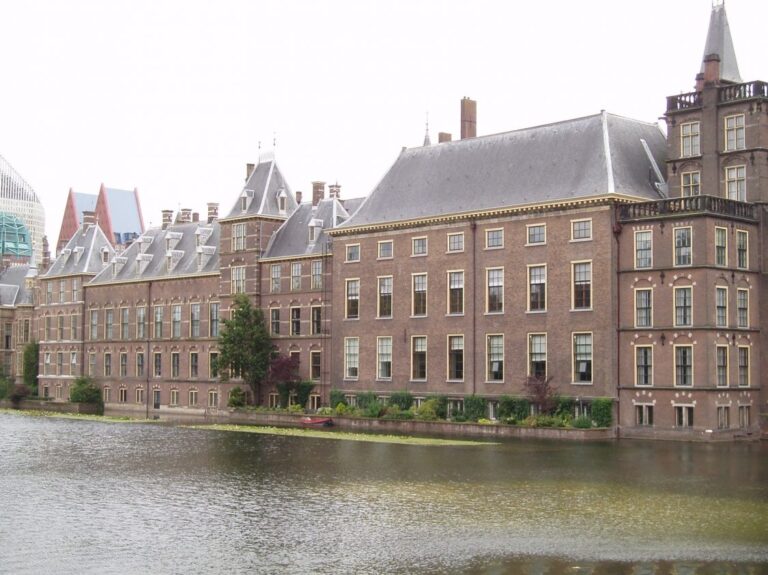
Intervention Before the Dutch Senate Roundtable on Afghanistan: Codifying Gender Apartheid as a Crime Against Humanity
Solidarity & Network-Building
Women’s Initiatives for Gender Justice stands in solidarity with Afghan and Iranian women’s rights defenders, survivor activists, and diaspora networks challenging regimes of gender-based domination.
We support and collaborate with efforts such as the End Gender Apartheid and the People’s Tribunal for Women of Afghanistan, where prosecutors have advanced legal arguments on gender persecution under the Rome Statute and gender apartheid as an “other inhumane act.”
Our partnerships focus on amplifying survivor voices, ensuring safe participation, and connecting grassroots advocacy to international accountability forums, including UN and treaty processes. Survivors define justice, and their experiences guide how the world responds to gender apartheid.
Impact
Placed gender apartheid on the agenda of formal state and treaty processes by advancing its codification as a crime against humanity, including through a joint legal brief to UN Member States and a formal intervention before the Dutch Senate on Afghanistan in June 2025.
Contributed to emerging accountability efforts by supporting the End Gender Apartheid Campaign and collaborating with the People’s Tribunal for Women of Afghanistan, where prosecutors have formally advanced legal indictments framing gender apartheid as both gender persecution under the Rome Statute and an “other inhumane act.”